The Roma Community from the Perspective of Visual Arts
The project targets the social need for enhancing intercultural dialogue and European identity protection by understanding cultural diversity. The project had the goal of raising awareness about these issues through documentary films and photos.
The project encompasses two documentary films and two photo camps in Harghita County.
In 2015 we realized the two documentary films and two photo camps, which show us, in a realistic way, the lifestyle, the habits, the traditions, the crafts and the coexistence with the locals of the Roma population in two villages.
The general objective of the project was to encourage the cultural dialogue through the understanding of cultural diversity. The specific aims were to promote a better understanding of cultural diversity and to consolidate the intercultural dialogue, including the Roma minority culture.
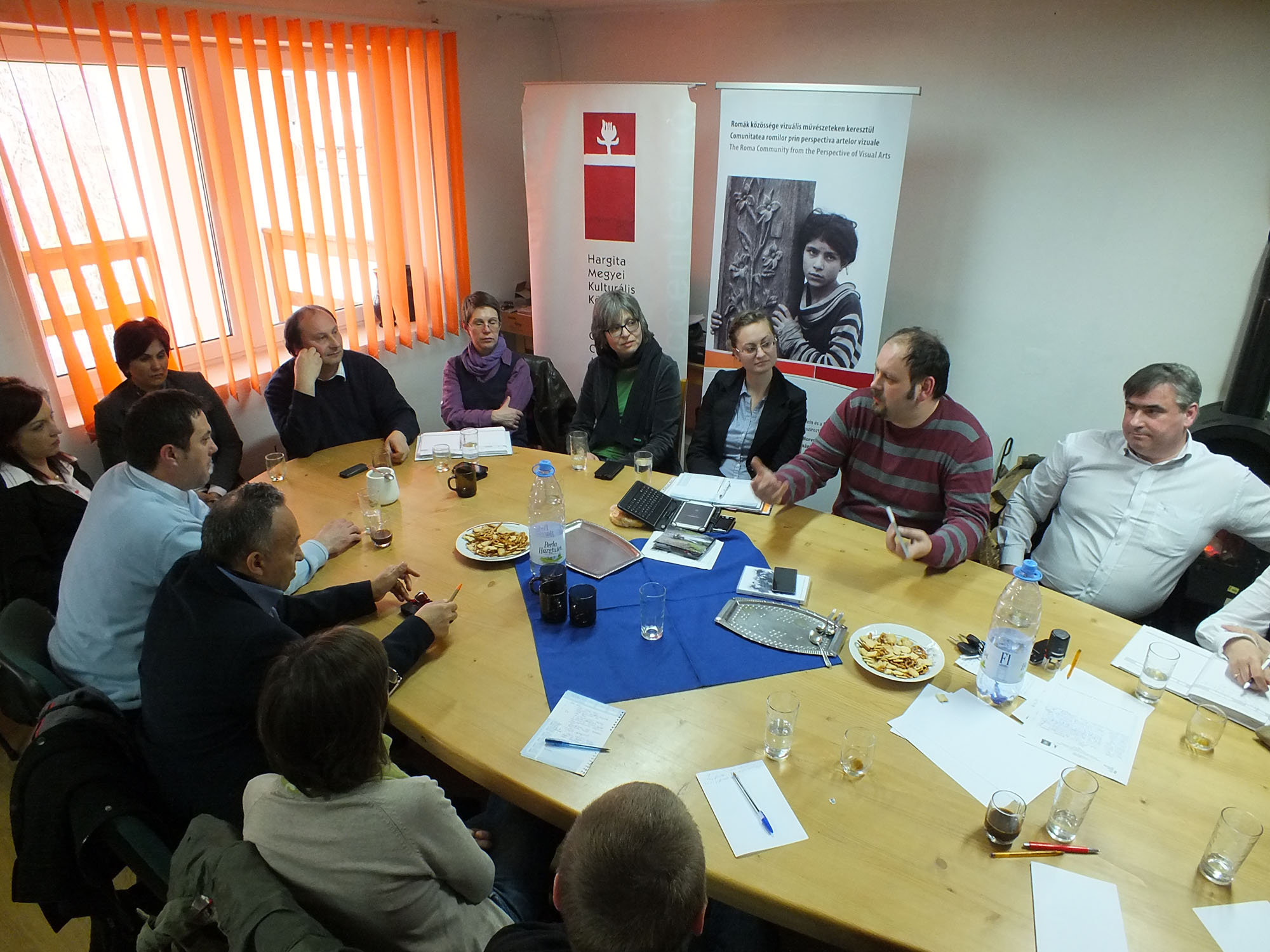
We reached these aims in an innovative way, by organizing documentary presentations and photo exhibitions followed by round table discussions in the villages where the documentaries are set: Crișeni and Ciucsângeorgiu.
The project was realized within the framework of the Promotion of Diversity in Culture and Arts within European Cultural Heritage Program and was funded by EEA Grants.
Documentaries:
ANGÉLA
Directed by Botond-Csaba Püsök (Spot film)
33 min
Awards:
2016
International Documentary Film Festival ASTRA , Romania – best direction
Docuart Fest, Romania – best direction
Mediawave International Film Festival, Hungary – best film in the category ”ON THE ROAD” online festival, Audience Awards
Verzió International Human Rights Documentary Film Festival, Hungary
2017
Filmtettfeszt – Hungarian Film Days – 3. Filmgalopp – shared prize
2018
KAPTÁR – Documentary Film Retrospective – First prize
CRIȘENI: FRIDAY–SUNDAY
Directed by Katalin Daczó and György Berszán-Árus (Rubin Stúdió)
48 min
Awards:
2017
”Wekerlei Cégér” Film Festival – first prize
Photo Camps
The photo camp in Ciucsângeorgiu was held between 26–29th October, while the camp from Atid village took place between 9 –12th November. The photographers invited to the camp in Ciucsângeorgiu included Zsigmond Bálint (Tîrgu Mureș), Gyula Both (Tîrgu Mureș), László Attila Kovács (Sfântu Gheorghe), Előd Erdély Bálint (Odorheiu Secuiesc), Hunor Magyari (Odorheiu Secuiesc), Vajk István Szigeti (Miercurea Ciuc). The photographers invited to the camp in Atid included Zsigmond Bálint (Tîrgu Mureș), Ede Tordai (Tîrgu Mureș), László Incze (Miercurea Ciuc), Csongor Miklós (Miercurea Ciuc), Rafael Török (Miercurea Ciuc) and Béla Kása (Hungary). The artistic director of the photo camps was Gyula Ádám photographer.
From the material of the photo camps we realized a calendar for the year 2016, postcards and photo exhibitions in the two villages. The documentaries were presented in these villages, the presentations being followed by professional round table discussion.
Publication realized from the photos: https://issuu.com/hargita_kultura/docs/catalog_comunitatea_romilor_prin
The project closing event took place at the County Council on 8th April 2016, on the International Roma Day, with the presentation of the films and a photo exhibition, promoting the Roma ethnic heritage and Roma culture.
The continuity of the project is assured through the films and photo exibitions which are presented from time to time in different communities at events all around the county and in other regions as well.